Strengthening the continuum of maternal care in rural Sierra Leone
The Mansaray Foundation (TMF) works alongside rural communities and health facilities in Sierra Leone to strengthen maternal and child healthcare.
Our approach recognizes that improving maternal health requires more than a single intervention. A mother needs access to information and antenatal care. She needs skilled healthcare professionals. Those professionals need appropriate equipment and safe facilities. Clinics need reliable infrastructure. Mothers and newborns need continued care after delivery. And when complications require a higher level of care, a reliable referral and transportation system can become critical.
TMF is working to strengthen this entire continuum of care, from the community to the clinic and, when necessary, from the clinic to a higher-level health facility.
Select a link in the chain
Community Outreach
Health promotion, awareness campaigns, and trust-building in the communities our partner clinics serve.
Four areas where we are strengthening care
Many rural health facilities serve thousands of people while operating with limited space, electricity, medical equipment, and other essential resources.
TMF works alongside partner facilities to identify priority gaps and mobilize resources to improve the environment in which maternal and newborn care is provided.
Ultrasound & Diagnostic Services
TMF is working to strengthen access to ultrasound and other appropriate diagnostic equipment for maternal healthcare.
Our goal is not simply to provide equipment. Diagnostic technology must be paired with appropriate training, mentorship, supervision, and continued competency development.
Equip → Train → Mentor → Supervise → Measure → Sustain
Delivery Room Renovation & Expansion
Some of our partner facilities provide maternal services in extremely limited or confined spaces.
TMF is prioritizing the renovation and expansion of maternal-health spaces so healthcare professionals can provide antenatal, delivery, and postnatal care in more appropriate environments.
- —Delivery-room renovation
- —Expansion of maternal-health spaces
- —Improved antenatal and postnatal areas
- —Delivery beds
- —Newborn cribs and mattresses
- —Protective sheets for delivery beds
- —Essential maternal and newborn equipment
- —Improvements to electricity, ceilings, and other infrastructure where needed
Solar Power for Rural Health Facilities
Reliable electricity is fundamental to quality healthcare.
As part of our multi-stakeholder approach to reducing maternal mortality, The Mansaray Foundation partnered with GIZ to support solar installations at its four partner facilities: Panlap, Binkolo, Kabombeh, and Kalangba.
With GIZ support, these solar power systems strengthen the infrastructure that supports maternal and community health services at the four facilities.
TMF extends its sincere gratitude to GIZ for being part of the solution and supporting efforts to improve the quality of healthcare in rural Sierra Leone.
Four facilities. 49 communities. More than 30,000 people in their catchment areas.
TMF works alongside four rural health facilities whose combined catchment areas encompass more than 30,000 people across 49 communities. These facilities are central to our work.
They allow TMF to connect infrastructure, equipment, healthcare-worker support, maternal-health programs, community outreach, and emergency referral into a more coordinated approach.
Panlap Health Centre
14
Communities
7,000+
Catchment population
Priority: Equipment • Nutrition • Transportation
Panlap Health Centre serves approximately 14 communities with a combined population of more than 7,000 people.
TMF has supported the renovation and expansion of the facility's delivery room, strengthening the environment for maternal care. Continued investment in essential medical supplies and equipment, maternal nutrition, and medical transportation is needed to improve maternal health outcomes for women and families served by the facility.
Location
Panlap, Bombali District, approximate locationView larger map
Identified needs
- —Suitable newborn cribs
- —Ultrasound equipment
- —Fetal Doppler
- —Protective sheets for delivery beds
- —Maternal nutrition support
- —Medical transportation and emergency referral support
Binkolo Community Health Centre
15
Communities
9,552
Catchment population
Priority: Equipment • Nutrition • Transportation
Binkolo Community Health Centre serves 15 communities with a total catchment population of 9,552 people.
TMF has supported delivery-room renovation and expansion at Binkolo. Continued investment in essential medical supplies and equipment, maternal nutrition, and medical transportation is needed to improve maternal health outcomes for women and families served by the facility.
Location
Binkolo, Bombali District, approximate locationView larger map
Identified needs
- —Essential medical supplies and equipment
- —Fetal Doppler
- —Mattresses for newborn cribs
- —Maternal nutrition support
- —Medical transportation and emergency referral support
- —Protective sheets for delivery beds
Kabombeh Community Health Post
6
Communities
4,000+
Catchment population
Priority: Renovation & Expansion • Nutrition & Education • Birthing Buckets • Equipment
Kabombeh Community Health Post serves six communities with a combined population of more than 4,000 people.
Kabombeh demonstrates why strengthening maternal healthcare requires working both inside the clinic and within the surrounding community. Strong cultural norms lead some pregnant women to prefer delivering at home, so community engagement, maternal-health education, trust, and the quality and accessibility of facility-based care are particularly important.
While progress has been made, Kabombeh remains a priority for continued investment. TMF is working to strengthen maternal care through improved delivery and postnatal services, maternal nutrition and education, and practical Safe Motherhood support that helps women access and engage in facility-based care.
Location
Kabombeh, Bombali District, approximate locationView larger map
Identified needs
- —Delivery and postnatal unit renovation and expansion
- —Maternal nutrition and health education
- —Safe Motherhood Birthing Buckets
- —Essential medical supplies and equipment
- —Fetal Doppler
- —Ultrasound machine
- —Cribs and mattresses
- —Protective sheets for delivery beds
- —Delivery beds
Strengthen the clinic. Strengthen community trust in the clinic.
Support Kabombeh Community Health PostKalangba Community Health Centre
14
Communities
9,592
Catchment population
Priority: Delivery Room Renovation & Expansion • Medical Supplies & Equipment • Transportation
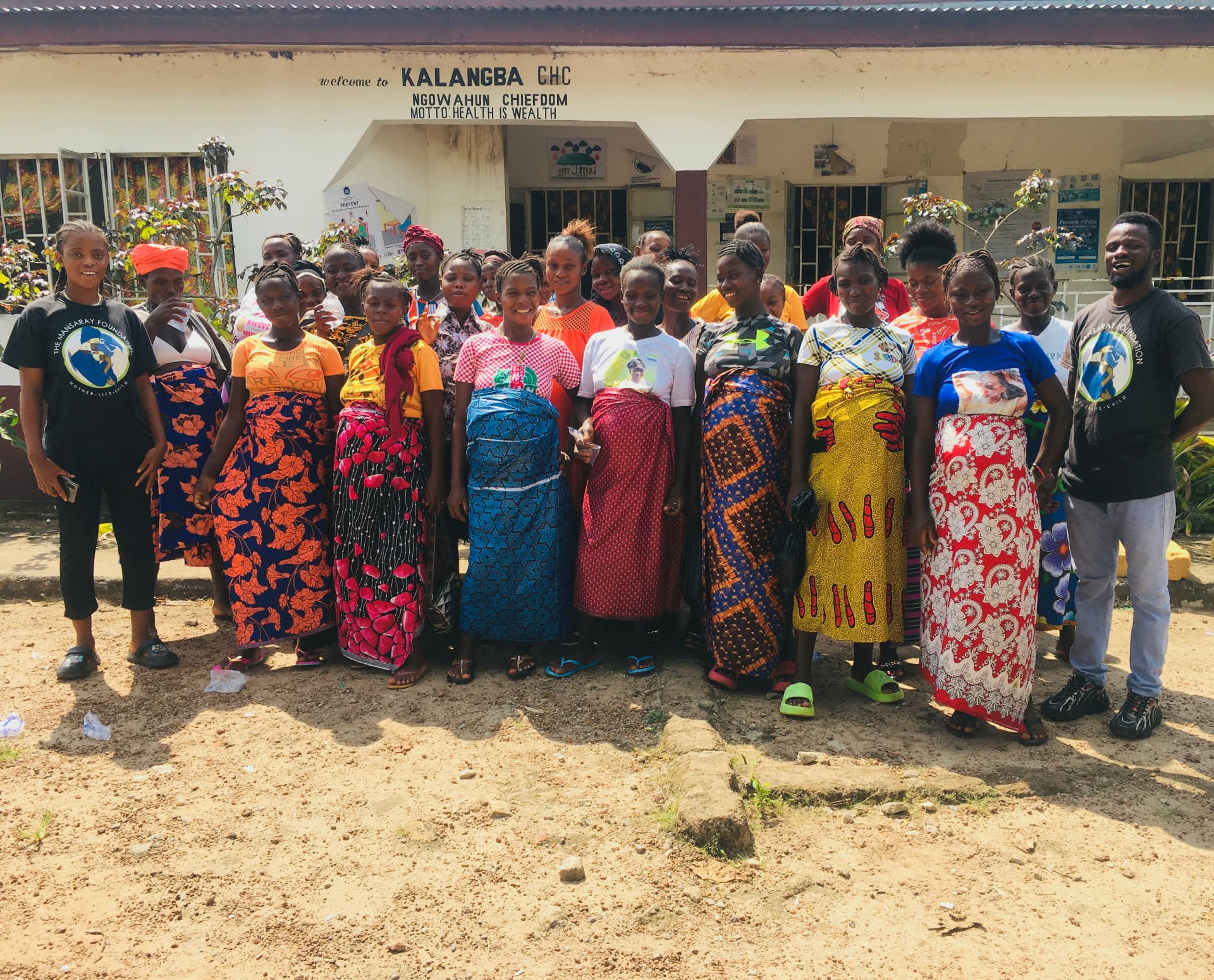
Kalangba Community Health Centre serves 14 communities with a total catchment population of 9,592 people.
Kalangba CHC is a growing partner facility where TMF has identified delivery-room renovation and expansion, medical supplies and equipment, and medical transportation as the most urgent priorities.
Location
Kalangba, Bombali District, approximate locationView larger map
Identified needs
- —Delivery-room renovation and expansion
- —Essential medical supplies and equipment
- —Fetal Doppler
- —Delivery beds
- —Cribs and mattresses
- —Protective sheets for delivery beds
- —Maternal nutrition support
- —Medical transportation and emergency referral support
0
Partner health facilities
0
Communities
0+
People in combined catchment areas
Known minimum based on currently provided clinic data: Panlap 7,000+, Binkolo 9,552, Kabombeh 4,000+, Kalangba 9,592, a minimum combined catchment population of 30,144+. We use "30,000+" publicly because two of these figures are approximate.
Help us strengthen the next link in the chain
Ultrasound & Diagnostic Services
$18,000 campaign goal to purchase two ultrasound machines.
Help fund two ultrasound machines to expand access to diagnostic imaging, alongside compatible technology, deployment, training, maintenance, and ongoing clinical support.
Support ultrasound servicesFrom ANC to Safe Delivery at Kabombeh
$13,400 integrated continuum-of-care goal.
Support nutrition and education, delivery and postnatal infrastructure, and practical safe-motherhood support at Kabombeh Community Health Post.
Support the Kabombeh continuumEmergency Referral & Medical Transportation
$18,000 fundraising goal.
Help TMF build a dependable referral and transportation system connecting rural health facilities with higher-level care.
Support medical transportationFrom Activities to Outcomes
As TMF expands its programs, we are strengthening how we measure progress, moving beyond activities delivered to better understand what changes for mothers, babies, families, and communities.
Explore Our ImpactFollowing the mother's journey
TMF is introducing a unique Maternal Health ID for program participants.
The system is intended to help connect participation across the maternal-health journey, so TMF can better understand continuity of care and strengthen program monitoring and donor accountability.
- 01Maternal Health & Wellness
- 02Ultrasound
- 03Birth preparedness
- 04Safe Motherhood support
- 05Facility delivery
- 06Referral
- 07Postnatal follow-up
No beneficiary names, identifiers, medical records, pregnancy information, or personally identifiable health information are ever published on this website.
We do not claim that TMF caused reductions in specific complications or maternal mortality unless supported by reliable evidence. Our goal is to build increasingly strong evidence showing what is working, what needs improvement, and where future investment can make the greatest difference.
One mother. One journey. Many links in the chain.
- 01
Community
↓Education & Outreach
- 02
Pregnancy
↓Antenatal Care + Nutrition
- 03
Diagnostics
↓Ultrasound + Skilled Healthcare Workers
- 04
Delivery
↓Better Equipment + Safer Maternal-Health Spaces
- 05
Complication
↓Emergency Referral + Medical Transportation
- 06
After Delivery
↓Postnatal Care + Community Follow-Up
- 07
Long-Term
↓Stronger Clinics + Skilled Staff + Local Leadership + Better Data
Maternal health is a chain. Every link matters.
The Mansaray Foundation works alongside communities, healthcare professionals, health facilities, government stakeholders, donors, and partners to strengthen those links. Our current priorities are clear:
- —Bring better diagnostic capacity to rural maternal care.
- —Create safer and more appropriate spaces for mothers to give birth.
- —Build a dependable pathway to higher-level care when emergencies occur.